|
LUXMAN
vintage
audio |
|
LUXMAN
vintage
audio |
Luxman L 225, L 230, L 235 => L200 Series
General:
This Luxman L230 audio amplifier made & produced by Luxman (Alpine) in the late 1980’s. It is a part of the L200 series amplifiers of Luxman.
Photos:
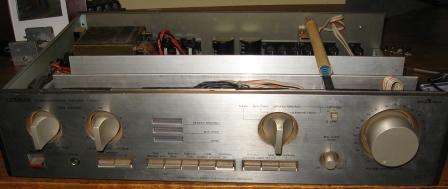
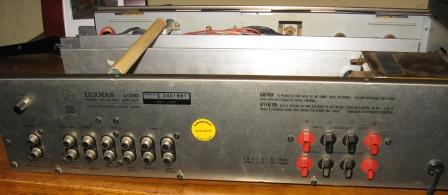
front and back
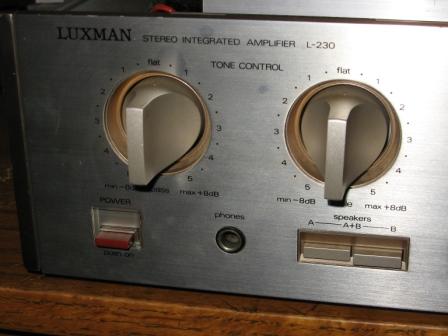
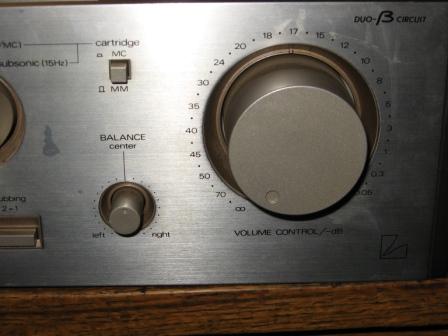
details front
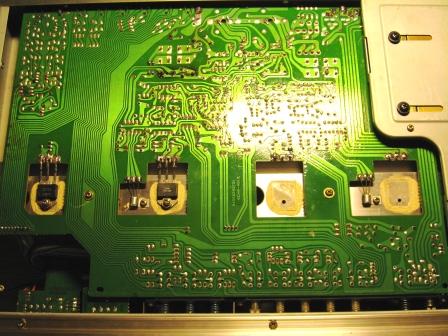
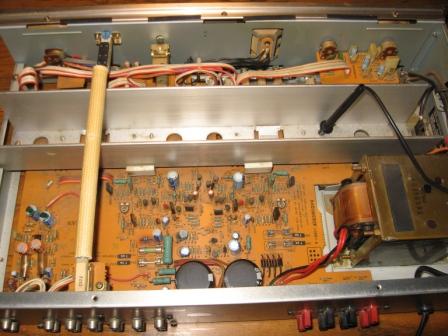
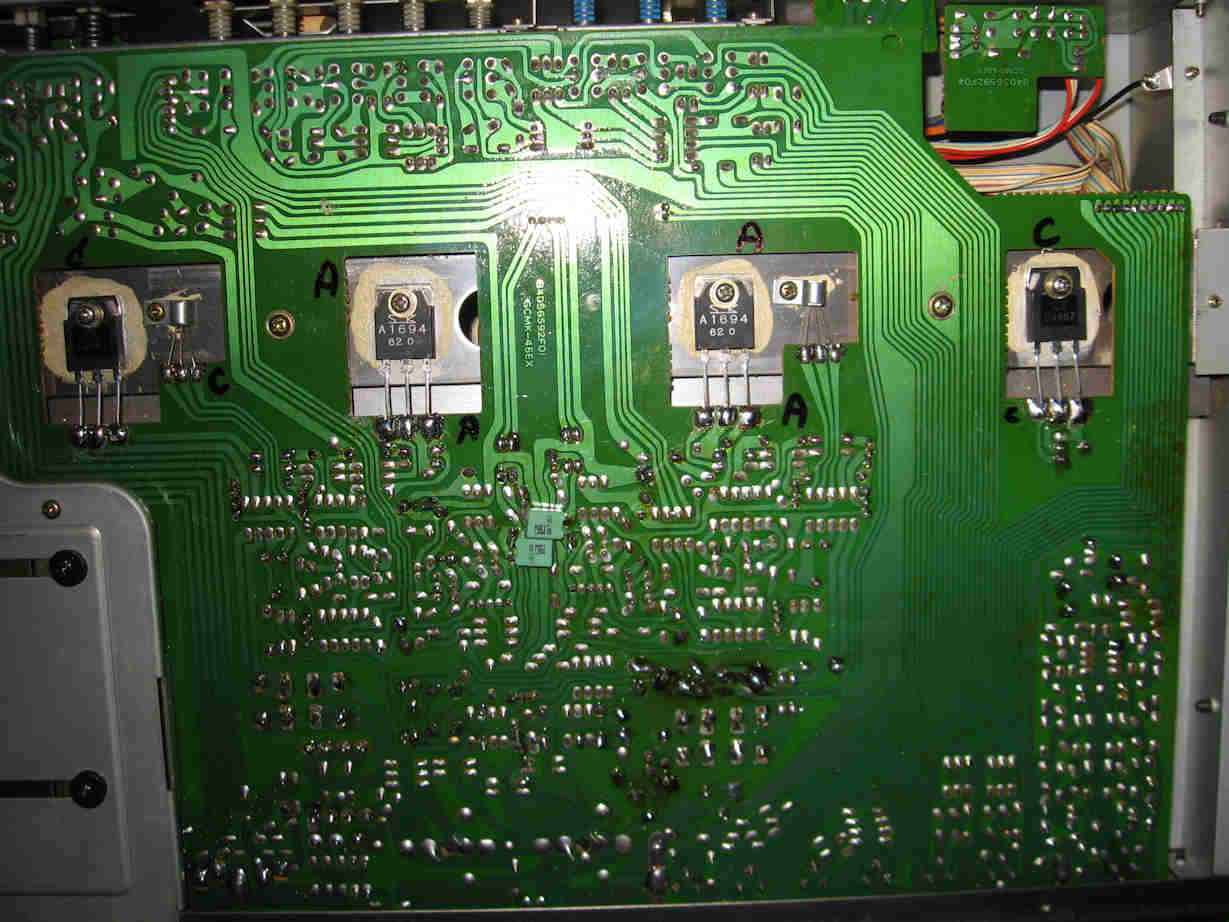
Bottom with badly restored pcb, incorporating wrong power transistors. Unrestored interior, lamps on front also to be replaced by leds..
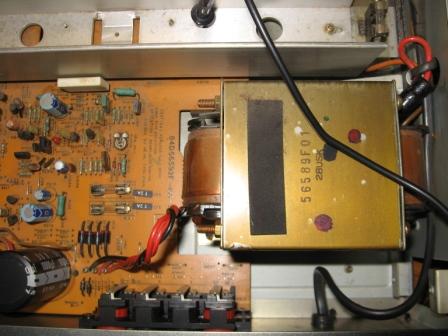
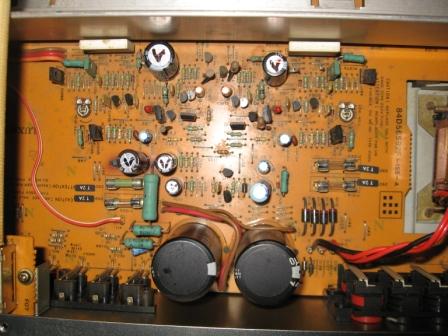
Power supply. unrestored preamp.
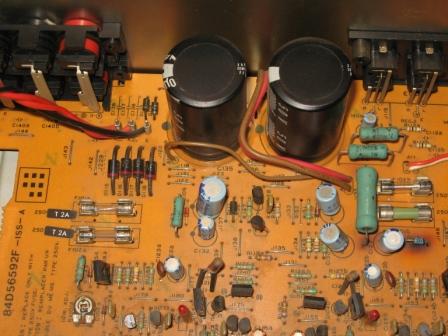
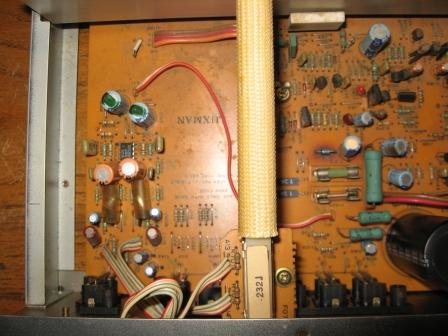
part of the pcb unrestored restoration in proces: new electrolytic capacitors.
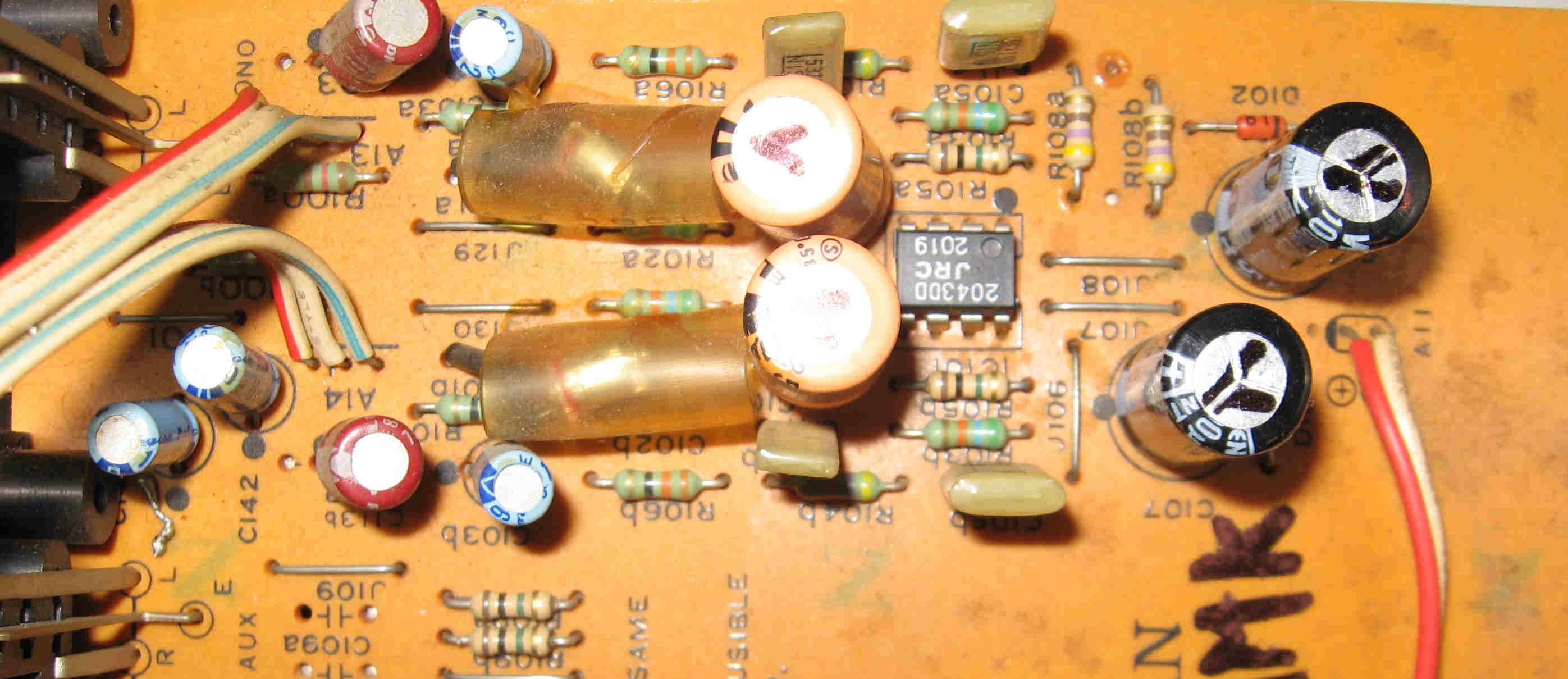
RIAA-amp with new caps
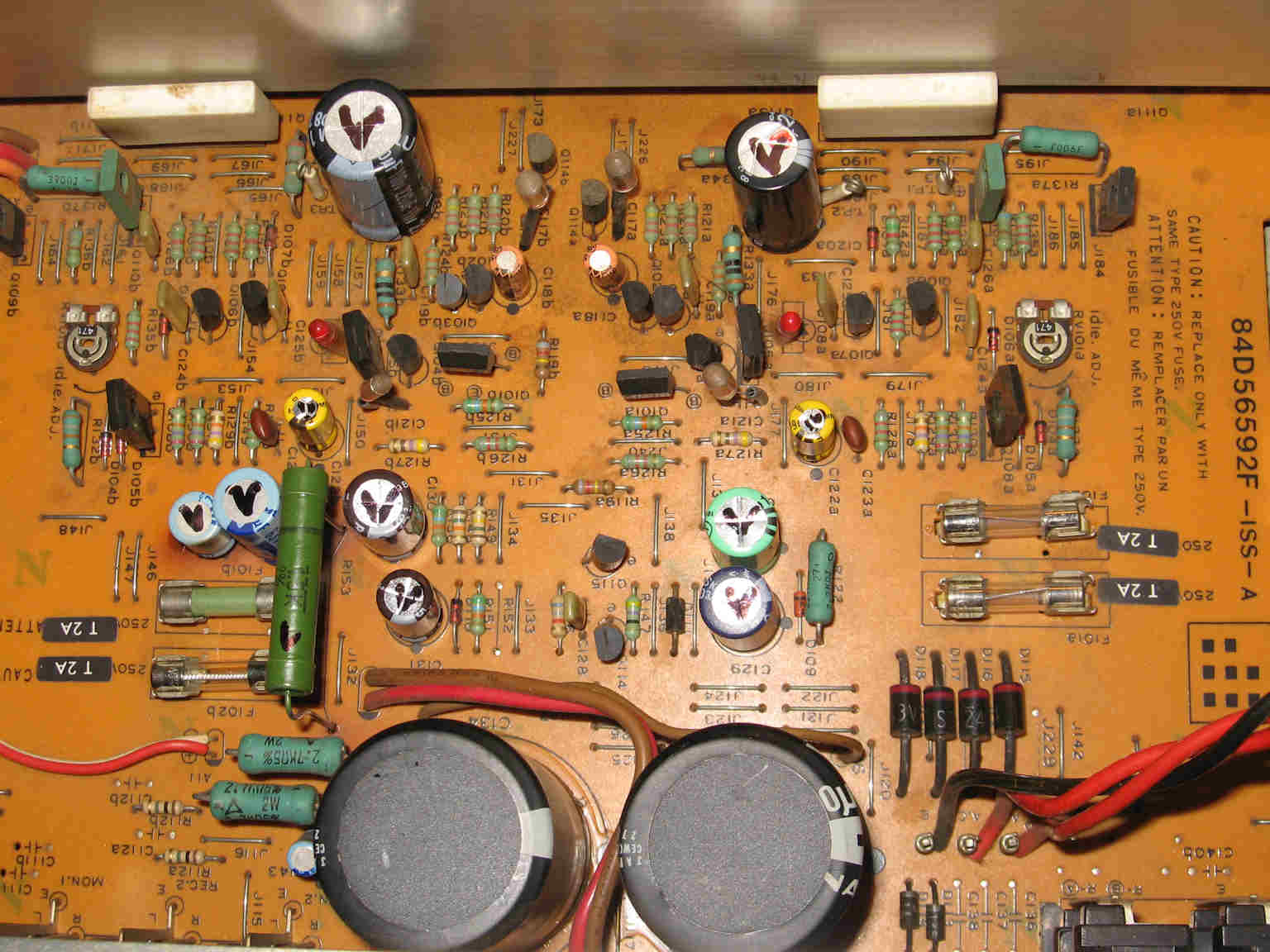
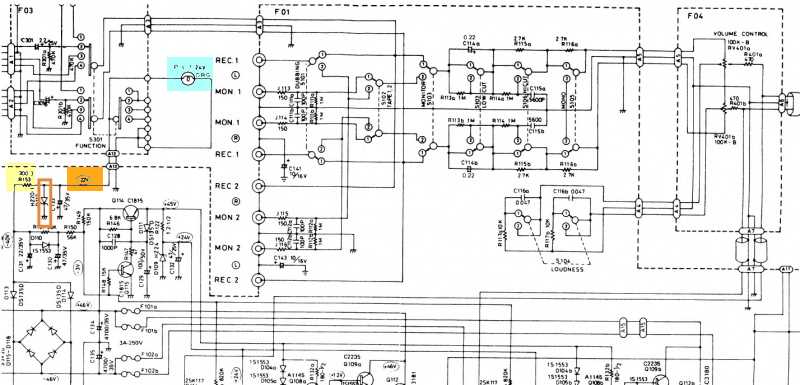
Restored amp with new resistor and changed circuit to feed the new leds on the front panel, the zenerdiode is obsolete now.
The new final power transistors from Sanken mounted in their places, the amp is operational now.
Specifications & Special features:
User manual of the L200 series download in PDF format click here
This Luxman L230 audio amplifier is a affordable yet high quality amp made by Luxman.
It incorporates Duo-Beta ® feedback and the tone control is not the usual, it is in the feedback line of the power amp.
No traditional tone amp is to be found in this amplifier.
It has "single pcb policy" and has the power transistors directly soldered to the main pcb.
The power supply is simple, but has sufficient capacity to feed a 2x60W basic amp.
It has a common IC grade MC & MM/MD pick-up amp.
The protection circuits are rather simple, so you can easely damage your amp when used improperly.
It has a fully symmetric and complementary bipolar transistor power output with
high speed & high current plastic power transistors.
Schematic:
Click here to download the service manual of the L225-L235 in PDF format (also available in Mobi-format)
Click here to see the L200 series main schematic diagram in PDF format
Click here to see the L200 series power supply schematic diagram in PDF format
Modifications:
The power transformer of the L230 is much bigger than in the L200,
but most of the amps of the L200 series are working on the same power rail voltages,
some amps of the L200 series do not have a phono MC/MM switch and have only 1 lamp in the front.
On the photos you can see that several electrolytic capacitors are to be replaced.
Some amps of the L200 series have smaller sized driver transistors in the power amp section,
replace them with bigger ones as in the L230 or heatsink the small drivers.
The zener diode D112, 20V/3W, needs to be replaced by a 4 Watt type and extra heat sinking to D112 must be applied,
when original light bulbs are applied. Otherwise problems with this circuit will come back again.
The original power design of this circuit part is incorrect, your pcb will probably be burnt like the one on the photo above.
When the light bulbs are replaced by leds (that I prefer), the zenerdiode D112 is obsolete and can be removed,
the 300 Ohm resistor R153, must be replaced by a 1,5 to 5,6 KOhm 2W type as on the photo, depending on the type leds you use,
and then you have the correct power design.
I took 3 leds of different color: red, yellow and green. if you like other colors like blue better, that can be used also,
R153 must then be adjusted to the correct value of led current, remember that Voltage is not important using leds,
only the correct Current through the leds has to be adjusted with R153, different led-colours may require an extra resistor in series of every led.
Replace C104 a b, C103 a b, C113 a b, C107, C108 a b, C130, C131, C129, C133, C132, C120 a b, C122 a b, C118 a b and C301 a b.
The power transistors 2SA1263/2SC3181 (To) of this particular amp model were broken,
and were replaced in the past by BD249/BD250 (TI) by a repair man who did not know what he was doing,
that are of course not the right transistors, so I removed and replaced them by correct transistors.
I used 2SA1694 & 2SC4467 made by Sanken as you can see on the photo above,
cheap and great performance, even better than the original Toshiba's.
The power-amp input capacitors need to be replaced: C118, they may be small polyester or
polypropylene 3,3 to 4,7 uF 100V made by Wima as on the photo above, do not use big size caps, keep them small.
The power supply main capacitors C134, C135 of 10000 uF (4700 uF in L200) need to be decoupled by small HF capacitors:
add 2x 0,01 uF 100V ceramic, parallel to C134 and C135.
You can separate the power supply section to the main amps:
add 4 diodes capable of 6 Amperes continious current, add 2 main caps of 10000 uF (4700 for some L200 versions) (plus decoupling caps of course).
Now you can have 2 separate power rails for the 2 power amps, some electronic know how is required to do this particular modification.
You can also connect the speaker terminals directly to the amps and not use the speaker switches at the front.
Remember that the protection-circuit is simple and will not protect your speakers when the power amps break down.
I also did some experiments with different "loudness" switch capacitor values C116a/b, 0.047 uF,
as I found the loudness switching too agressive in the sound image.
I used 0.005 and 0.01 uF, both usable values, this of course depends on the speakers you use,
I used Tannoy HPD315, Sixes 611, 609 and 605 speakers to test.
I found the muting circuit also to be vulnerable to defective parts, so I checked and changed the transistors and some other parts:
Q114, Q114a and Q115, R150, R151 and D109 / C132, all can be defective in some cases.
Check also working voltages of the caps in this circuit as I found some with incorrect values:
35V caps on a 46 Volt power rail, its certain this is going to be the cause of problems, replace with at least 50V caps.You can upgrade the common IC grade MC & MM/MD pick-up amp. by using a different IC.
I used a some high speed IC types to test, but was not able to hear any difference, the NJM 2043 does a great job.There may be some other things subject to modification, but this is the main mod I made so far.
^ The power design issue ^
Sound:
This amplifier is a member of the cheaper Luxman series made by Alpine Japan, though very good in sound quality.
These series of "High Quality" audio components soon got legendary of their outstanding quality and excelent sound quality.


© Hans Hilberink - PE1MMK ® 2000 - Last update: 04-04-2012.