The supertweeter project
by Hans Hilberink


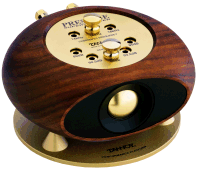
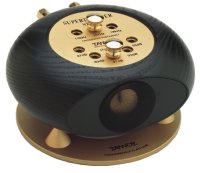
Tannoy offers 3 versions of its supertweeter, intended to accompany their famous Dual Concentric loudspeakers and may also their vintage models like the Monitor Gold and HPD. Pictures of these tweeters are shown below.

ST50 ST100 ST200


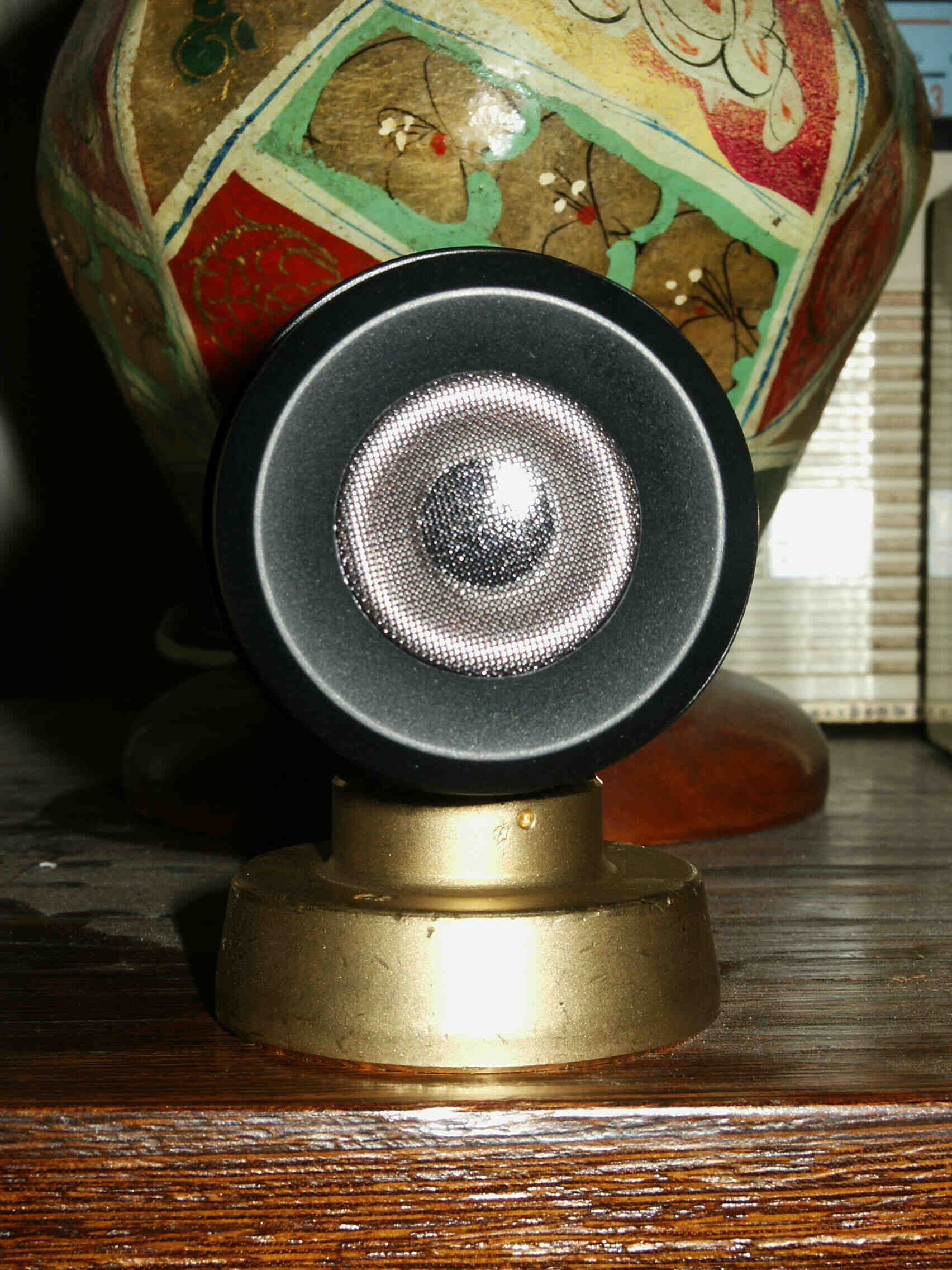
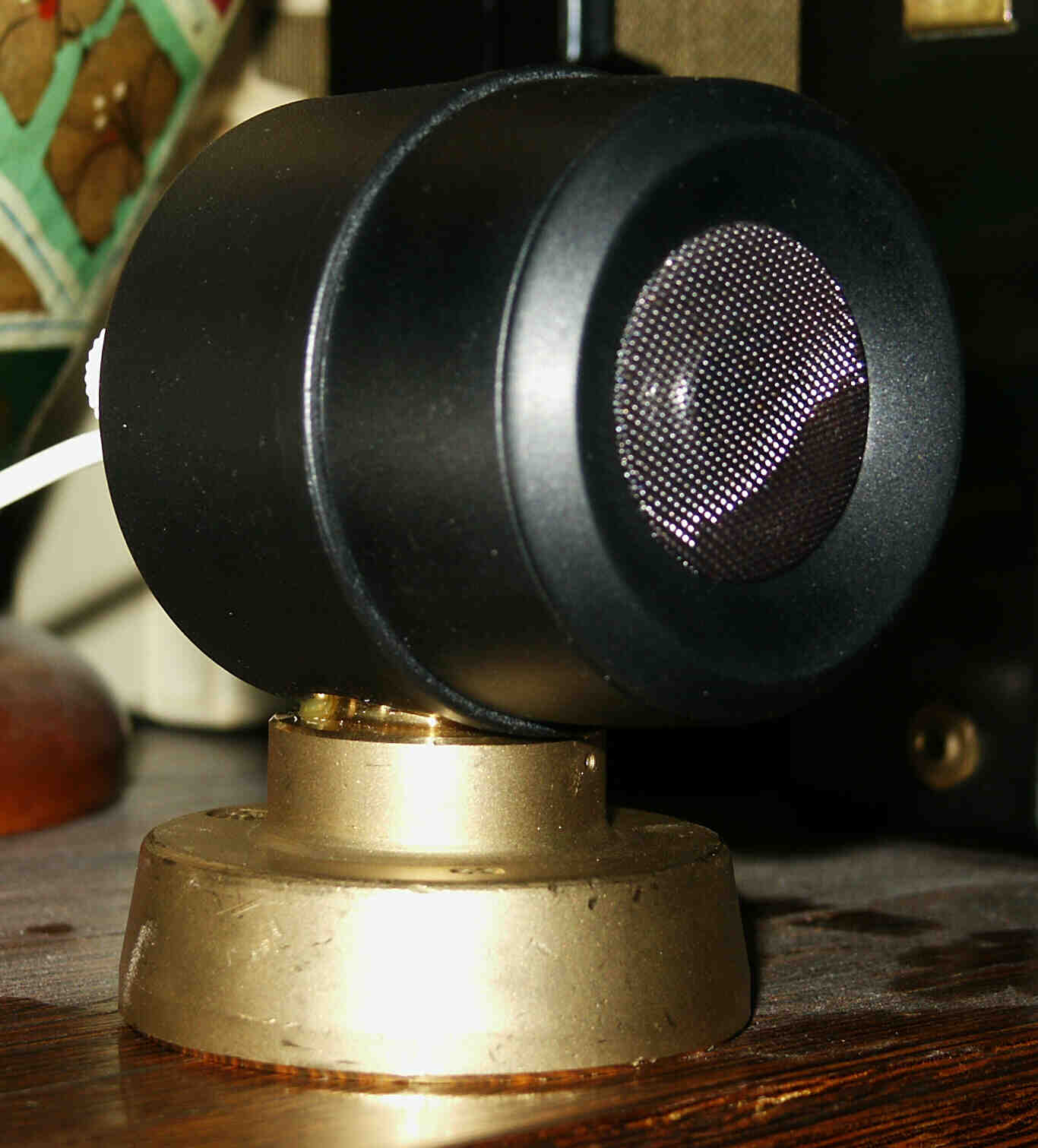
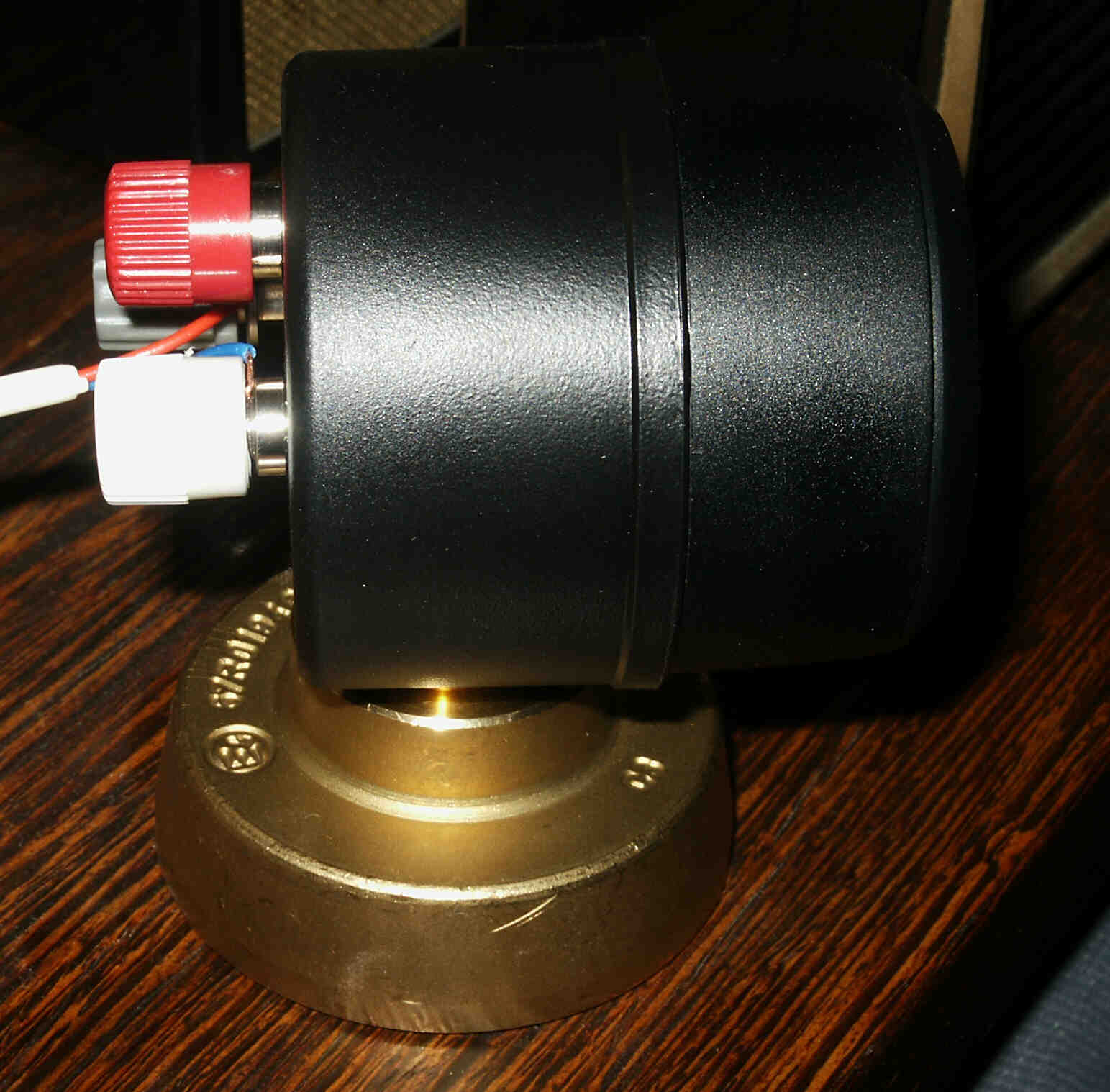
Reading the whitepaper of Tannoy about supertweeters I got interested in buying a couple of these ST-series tweeters. To be able to make a judgement about these Tannoy products, I had need for a tweeter as a kind of reference to compare these Tannoy supertweeters with, as my experience with supertweeters had ended in the early 1980's. So I decided to build a couple of DIY supertweeters. Sole purpose of these tweeters is experimeting, compare, get experienced with supertweeters and satisfy my curiosity. They need not to be the best tweeters, as long their parameters and sound are known to me. Below you can see the result. The two tweeters were made with a relatively low budget to spend, total cost is approx. $100 total for materials. 


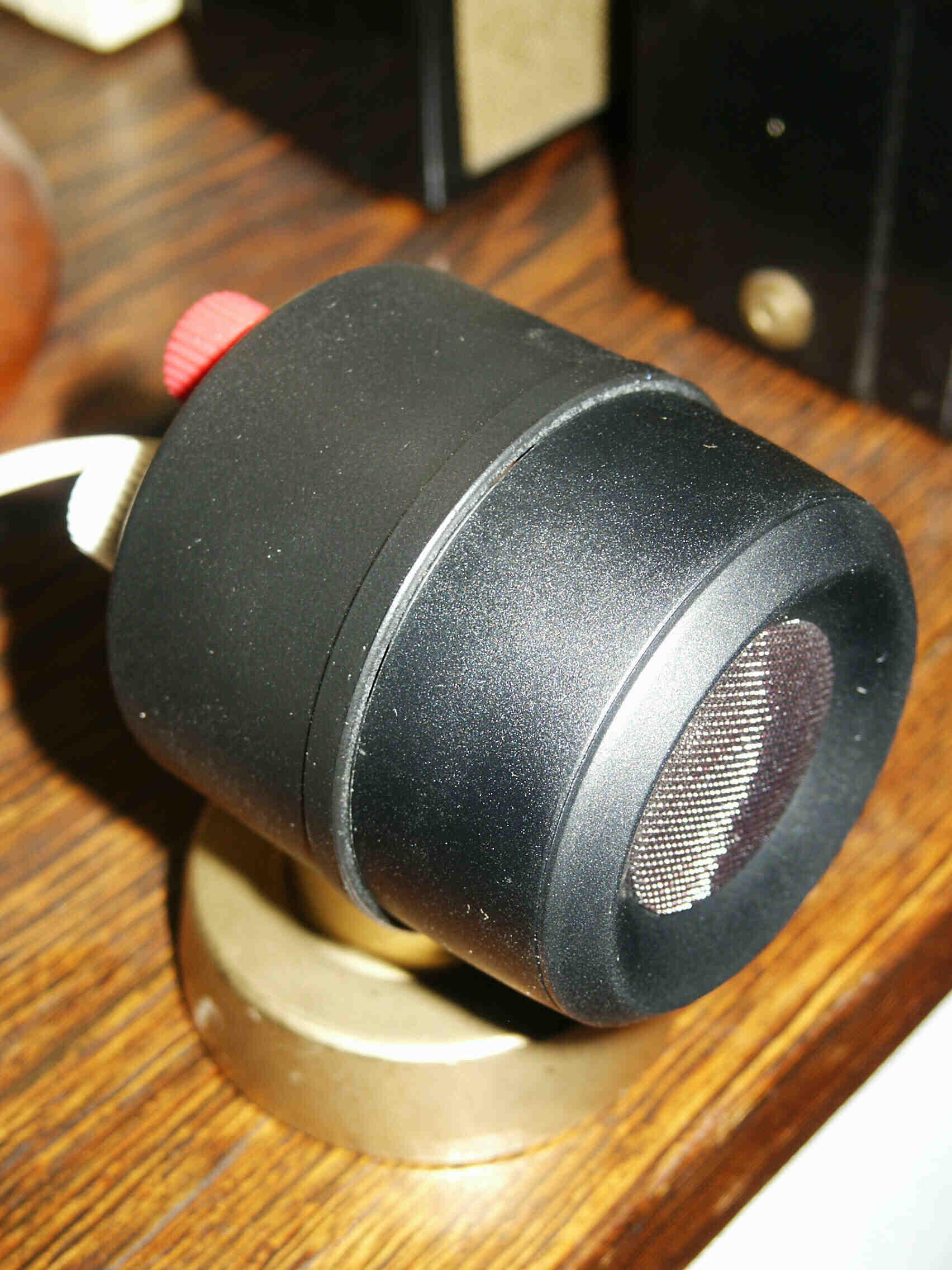
This Is the result of some days of selection of materials and parts and of building the parts together. 


The stand is a solid brass gasconverter spare part from an Italian car manufacturer. The tube is ordinary grey drain pipe, sprayed black with a high quality plastic paint. 
The two parts were glued together with construction glue, hot-glue is also applicable. 


The speaker is a $30 tweeter from Peerless Danmark Europe. It employs a 3/4 inch laminated aluminium dome 
and a 1 Tesla magnet, average efficiency is 93 dB SPL at 7-23 KHz, moving mass is 0.16 gramms. The dustcover is supplied with the tweeter by Peerless. 


The connectors are simple and cheap speaker connectors from the local parts shop. 
Each unit has 3 connectors, Grey is  ground,  Red is 2 uF in series and White is 1 uF in series.
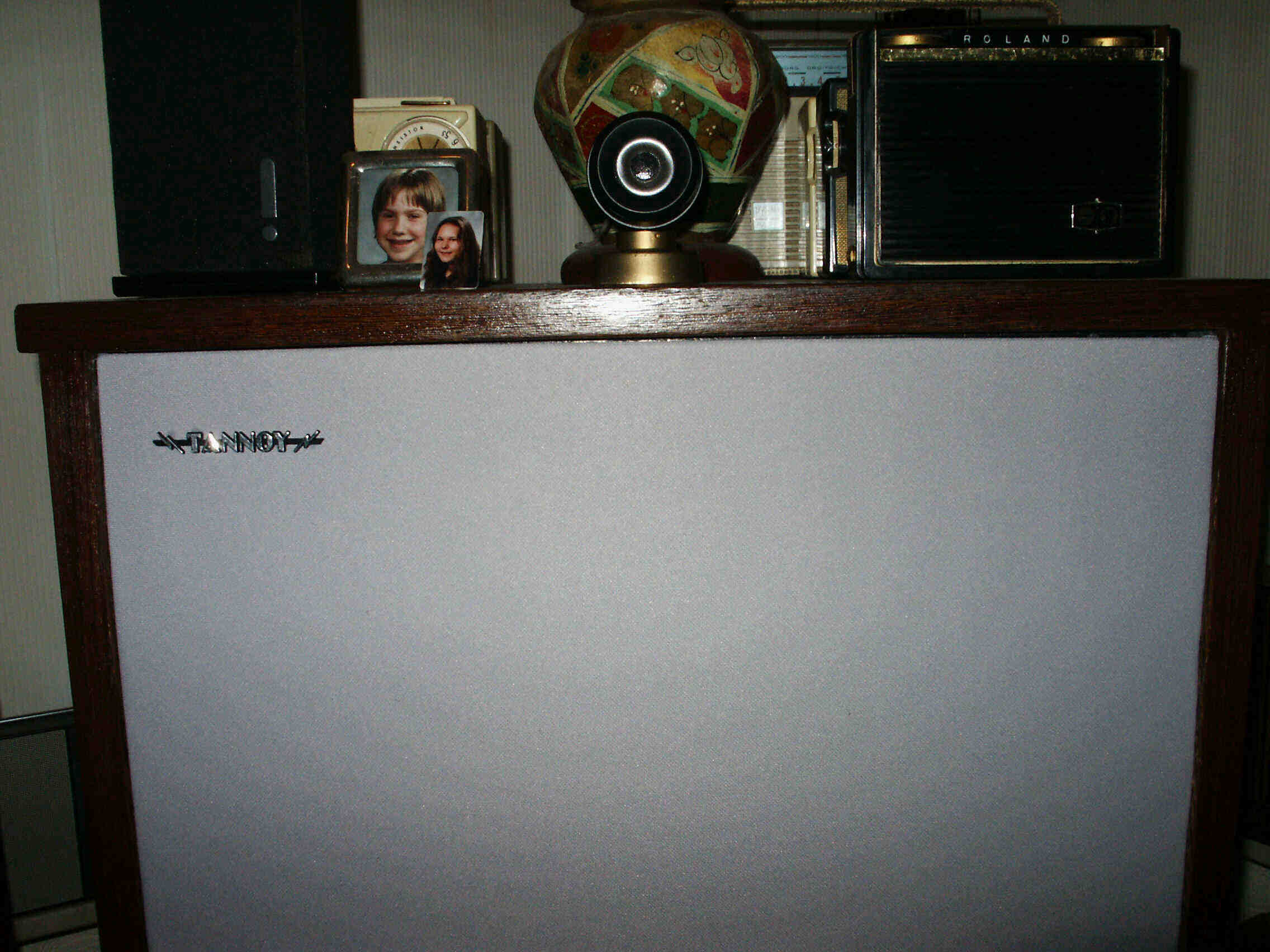
 

Just put the tweeter on top of the Monitor Gold and connect it to the speaker terminals to get the promised high-extension in your sound image.

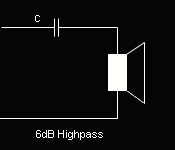
The filter is to be made in 6 dB or 12 dB Butterworth version, just on what your preference is. For now I chose for the 6 dB version as it is simpler, but for better performance the 12 dB version might be an option. The filter parts are from Wima Germany and Midwec USA, but any quality filters parts will do the job. 
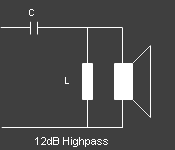
 

The component values I used were 2 uF and 1 uF for different crossover frequencies for the 6 dB version, for the 12 dB version I added a 0.08 mH coil. In this way I can use 3 different configurations: 1uF, 2 uF and 3 uF, the last value is simply done by connecting the White and the Red connectors together, so you have both capacitors in parallel, 
making 3 uF. The approximate crossover frequency with 2 uF is in my case 15 KHz. 
Values for different tweeters and configurations may differ.


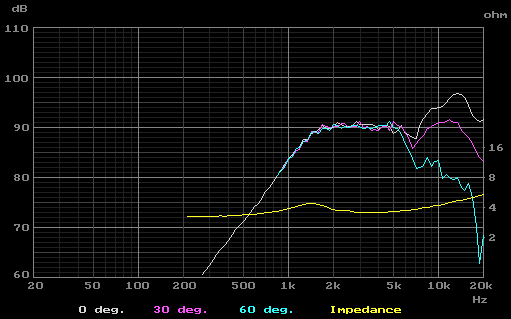
As you can see the diagram is quite acceptable for a low budget tweeter.


Thiele Small parameters: 
Nominal impedance Zn (ohm) 4 
Minimum impedance/at freq. Zmin (ohm/Hz) 3.2/3500 
Maximum impedance Zo (ohm) 4.0 
DC resistance Re (ohm) 3.0 
Voice coil inductance Le (mH) 0.1 
Resonance Frequency fs (Hz) 1400 
Mechanical Q factor Qms 1.13 
Electrical Q factor Qes 3.53 
Total Q factor Qts 0.86 
Mechanical resistance Rms (Kg/s) 1.26 
Moving mass Mms (g) 0.16 
Suspension compliance Cms (mm/N) 0.08 
Effective cone diameter D (cm) 2.6 
Effective piston area Sd (cm²) 5.3 
Force factor Bl (N/A) 1.1 
Reference voltage sensitivity
Re 2.83V 1m at 3500 Hz (Measured) (dB) 91.5 
Magnet and voice coil parameters: 
Voice coil diameter d (mm) 13 
Voice coil length h (mm) 1.8 
Voice coil layers n 2 
Flux density in gap B (T) 1.0 
Total useful flux (mWb) 0.1 
Height of the gap hg (mm) 2.5 
Diameter of magnet dm (mm) 40 
Height of magnet hm (mm) 7.5 
Weight of magnet (kg) 0.04 


Power handling: 
Long term Max System Power (IEC) (W) 100 

Here the parameters of the tweeter, quite acceptable for a low budget tweeter.

Below my experience with these nice little ones and with at last the Tannoy ST100's

2002:

The sound of the tweeters in combination with my Monitor Golds 15' is very interesting, as these tweeters add a little twinkle to the high tones of the sound image (I shall let you know more about it soon). Be aware of the fact that attenuation may be neccesary for the right balance with your sound system, in my case some 3 to 6 dB attenuation is preferrable. 

I have constructed these tweeters only as a reference to the Tannoy supertweeters that I am gonna test next month I hope, when I test an item I want to make sure that my knowledge is adequate and up to date, that my experience is recent and accurate.

I can recommend the above tweeters that I built to all curious Tannerds, although they are probably not recommendable in the same way the Tannoy supertweeters may be. Although they produce remarkably well for such cheep ones. I have constructed these to get used to supertweeters and to get to know all in and outs in practice before I start testing the Tannoys. A few experiences are quite remarkable.

First I have experienced that the use of horn tweeters in combination with Tannoy dc's is not recommended as these horn tweeters suffer the same typical limitations as the Tannoy hf horns as there is the dispersion. So one has to make a choice for tweeters that have better dispersion at their working frequency. This Peerles "cheapy" has better dispersion characteristics, specially at 30 deg off axis at 15 to 20 kHz. Efficiency is average, approx. 95 dB SPL at 15 to 20 kHz, so I am able to get in line with a Tannoy. The max freq. goes up to approx 25 kHz so they are usable starting from 15 kHz to 25 kHz. Thats the range we at least want to cover with a supertweeter.

2003:

Now the second experience that was quite remarkable, was the crossover filter. In my experience a 6 dB/octave filter at lets say approx. 14 KHz does not work very well. It adds too much lower frequency components in the tweeter that cause distortion of the sound coming from the supertweeter. That is not our goal to add distortion. So I am trying a 12 and 18 dB/octave filter now and will soon be able to report about this. first impressions are much better and lower distortion due to less lower frequency components in the supertweeter sound.

I did install the 12 dB / octave filter today and the difference is indeed significant. The distortion caused by lower frequencies is much lower and the sound produced by the tweeters is cleaner and they produce only highs for the most. The matching with the Monitor Gold is much easier now and specially after I added a 1.5 Ohms resistor in series with the tweeter to lower the efficiency a little. I think further experimenting with a 18 /dB filter will give interesting results.

2004:

Tannoy has not yet contacted me about their tweeters, I shall keep you informed.
The most interesting part has still yet to come.

After almost one year of listening to these cheapy super-tweeters, one significant issue concerning supertweeters came to my attention. This is the correct placing of the super-tweeters, it must be in point source position compared to the Tannoy speaker. This means that they should be placed much more back on the cabinet top then is shown on the above photos. If you fail to respect this, the tweeters will not match nicely with a
Tannoy DC speaker.

2005:

Tannoy Netherlands failed to deliver a sample of the ST series as promised until today, so I cannot continue this test, so I have to leave it here, that is really a pity. The attitude of Tannoy NL is very disappointing, their sole interest is apparently making money, they apparently lack the interest of working together with people who enjoy the sound of their home audio set and Tannoy products and share experience with the end user, they seem to think they know it all.
After this disappointing experience I shall certainly not buy a Tannoy supertweeter couple.

2006:

At last a friend of mine has brought me his Tannoy ST100's for a few weeks and I have compared them with my Peerless DIY tweeters. Now that was the second disappointing experience: it is defenitely worth considering building your own supertweeters, as the Tannoys added only very little more than my Peerless tweeters to the total sound image. In my opinion the Tannoy supertweeters look nice products but are way too expensive.
So not really my kind of beer.

2007:

Peerless inc. stopped the production of the above tweeter. They still make nice tweeters that may be usable for projects like this.


Below you can click a logo to get more information about the used products in this project.

Cheers,
Hans.


© Copyrights Hans Hilberink - PE1MMK ® 2002 / 15-01-2007 Va.